
Meta SAM 3D Just Shipped. Here's What Photogrammetry Still Does Better.
Meta released SAM 3D in late November 2025 — two models that turn a single image into a 3D reconstruction. SAM 3D Objects handles everyday objects and scenes. SAM 3D Body handles people. Both are open-weight, available on the Segment Anything Playground, and impressive enough that the line between "AI 3D" and "real 3D capture" deserves a fresh look.
The short version: SAM 3D is a serious piece of work, and it's not a replacement for photogrammetry. The two technologies solve different problems, and which one you reach for depends on what you're going to do with the model afterwards.
What SAM 3D Actually Does
SAM 3D Objects takes one photo and predicts shape, texture, and camera-relative layout for any object you click on. It was trained on roughly a million real-world images annotated through a "human-in-the-loop" pipeline that produced over three million verified meshes — a much larger and messier training set than the synthetic corpora most prior single-image models relied on.
The result is a model that handles real photographs gracefully. Cluttered scenes, partial occlusions, awkward angles — SAM 3D uses surrounding context to make sensible predictions about parts of the object it can't directly see. That's the breakthrough. Earlier single-image generators broke down the moment a chair leg disappeared behind a table.
You can try it in the browser. Click an object. Get a mesh. Seconds, not hours.
Where SAM 3D Wins
The use cases where SAM 3D is genuinely faster and easier than photogrammetry:
- You only have one image. Stock photos, screenshots, an old archive shot — anything where you can't go back and capture more angles. Photogrammetry needs dozens of overlapping photos. SAM 3D needs one.
- You want a quick visual stand-in. Game prototype set dressing, AR previews, mood boards, concept art. The mesh doesn't need to be measurable.
- Speed matters more than fidelity. A reconstruction that takes seconds instead of minutes changes what's possible in interactive workflows.
- You're working from imagery you can't reshoot. Historical photos, product catalogue images, frames from a video.
For these, SAM 3D is a real tool, not a toy.
Where SAM 3D Falls Short — In Meta's Own Words
The interesting part is that Meta is unusually honest about the model's limits. The release notes and follow-up coverage call out specific failure modes:
- Moderate polygon counts. Fine details — fabric wrinkles, small mechanical parts, sharp edges — get smoothed away. Higher-resolution variants are on the 2026 roadmap, which is also a polite admission that the current ones aren't there yet.
- Hallucinated back surfaces. The model has to invent the parts of the object it can't see. The arxiv paper acknowledges this directly: occluded regions are "completed from learned priors rather than observed data." UV seams stretch, patterns mismatch, and texture noise appears where the model is guessing.
- Heavy occlusion degrades fast. A chair half-hidden under a table comes out lumpy. Reconstruction quality drops in proportion to how much of the object is hidden.
- Tangled scenes break it. Cables, transparent materials, and objects intertwined with each other still confuse the model.
- Single reconstruction, no uncertainty. SAM 3D gives you one answer. It doesn't tell you which parts of the mesh it was confident about and which it guessed.
None of these are show-stoppers for the use cases above. They are show-stoppers for the use cases below.
Where Photogrammetry Still Wins
Photogrammetry doesn't generate. It reconstructs. You take overlapping photos from multiple angles, and the software triangulates the actual surface from what the cameras saw. There is no hallucinated back. There is no "learned prior" filling in the blind side of a vase. Every point on the mesh corresponds to a point that was actually photographed.
That distinction matters in four places.
1. Anything you'll measure or manufacture
Close-range photogrammetry routinely achieves sub-millimeter precision on small objects under good capture conditions, with absolute scale set from a known reference. SAM 3D outputs in arbitrary units and at moderate resolution — fine for visual use, not fine for "does this bracket fit the original part."
If a downstream step involves a clearance check, a fit, a 3D print that needs to mate with something, or a CNC tool path, you need geometry that came from physical measurement, not generative inference.
2. Cultural heritage and documentation
For artifacts, archaeological sites, or museum collections, the value is in capturing what is actually there, including the asymmetries, the wear patterns, and the irregularities that make the object historically meaningful. Generative models smooth these away by design — they regress toward the average of their training data.
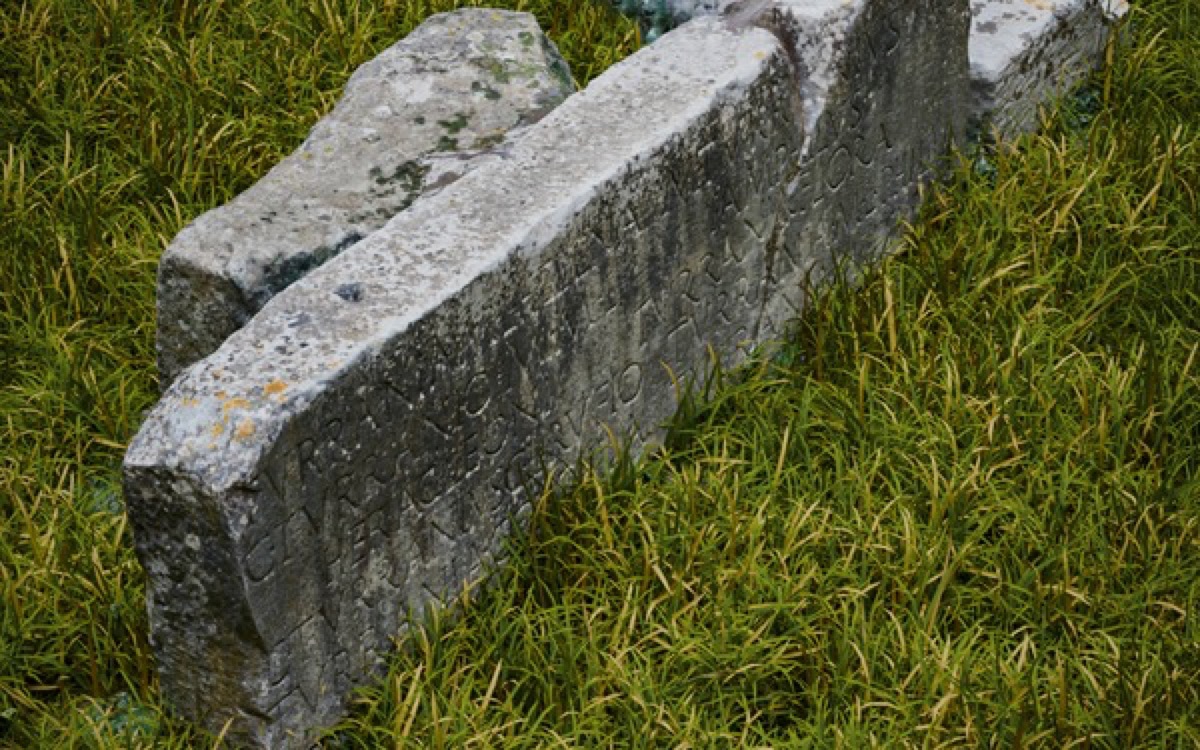 The Appian Tomb dataset — reconstructed from 116 photos. No invented surfaces, no smoothed-over erosion patterns.
3. 3D printing real objects
If you photograph a broken handle and want to print a replacement, the print has to fit. SAM 3D can produce a handle-shaped object. Photogrammetry produces a model of that specific handle, including the worn edge and the manufacturing asymmetry that matters when you put the new part next to the old one.
4. Anything where the back of the object matters
This is the cleanest dividing line. If your downstream use only ever sees the object from the front, SAM 3D is fine. If anyone — a customer, a CNC machine, a 3D printer, a measurement tool — will look at the side that wasn't in the original photo, you need real photogrammetric coverage.
A Practical Decision Framework
| SAM 3D (single image) | Photogrammetry | |
|---|---|---|
| Input | 1 photo | 30–200 photos |
| Time | Seconds | Minutes to hours |
| Best output use | Visual, AR, prototyping | Measurement, manufacturing, archive |
| Geometry source | Learned priors + visible cues | Triangulated from real photos |
| Hidden surfaces | Hallucinated | Captured (if photographed) |
| Real-world scale | Approximate | Sub-millimeter with reference |
| Failure mode | Smooth, plausible, wrong | Holes where coverage was missing |
Use SAM 3D when "plausible and fast" is the right answer. Use photogrammetry when "real and measurable" is the right answer.
Where Replica Fits In
Replica is a native macOS photogrammetry app. It runs entirely on your Mac — no cloud upload, no credit metering, no queue. Point it at a folder of photos, get back a real mesh in USDZ, OBJ, FBX, or GLB.
A few things that pair well with the SAM 3D era:
- Workflows for both worlds. Use SAM 3D for the quick concept pass, then capture the asset properly with Replica when the project graduates to production. Both pipelines export to the same neutral formats.
- Replica Link for fast capture. Replica Link turns your Mac into a local photogrammetry server. You can shoot from a phone in the field and trigger reconstruction on the Mac in the studio without moving files manually.
- Watertight meshes for printing. Replica's Object Mask produces closed meshes ready for slicing — no hole-fill cleanup pass needed before sending to your printer.
The boundary between AI generation and real-world capture is going to keep shifting through 2026. SAM 3D is a strong reminder that for visual work, the AI side is already useful. The reminder going the other direction: when the geometry has to be true, photographs of the actual object still beat a model's best guess.
Get Started
Download Replica for macOS and run a real capture on something you can hold. The first time you compare a photogrammetry mesh against an AI-generated one of the same object, you'll see exactly where the dividing line sits.
Free datasets to try:
- Appian Tomb — 116 photos of a Roman tomb on the Via Appia.
- Easter Bunnies — small hand-painted objects, iPhone captures, plus print-ready STL.
Questions? Email info@ambiensvr.com.